You’ve packed your clothes, chargers, toiletries, and snacks. Then you remember the full-size shampoo in your carry-on and the power bank in the bag you’re about to check.
Two everyday items, two different baggage rules.
So what can you not bring on a plane? Fireworks and gasoline are banned from both bags. Pocketknives and full-size shampoo generally have to go in checked luggage, while power banks belong in your carry-on.
Here’s what to pack where, from toiletries and electronics to snacks and sports gear.
This guide covers U.S. domestic flights. If you’re flying internationally, check the security and customs rules for your route, plus your airline’s baggage restrictions.
What Can You Not Bring on a Plane?
Before you zip up your bag, check these common restrictions for carry-on and checked luggage.
Here are the items most likely to make you rethink where you packed them.
- Oversized liquids: Toiletries, drinks, and gels in containers larger than 3.4 fluid ounces (100 mL) generally can’t go through TSA screening in a carry-on.
- Sharp objects: Pocketknives, box cutters, and certain other sharp tools are prohibited in carry-on luggage.
- Weapons and firearms: Firearms and ammunition are prohibited in carry-on bags. Check TSA and airline requirements before packing either in checked baggage.
- Explosives and fireworks: Fireworks, flares, and other explosive materials are prohibited in both carry-on and checked baggage.
- Certain batteries: Spare lithium batteries and power banks cannot be packed in checked luggage.
- Flammable materials: Gasoline, lighter fluid, and many other hazardous substances are prohibited.
- Self-defense items: Pepper spray and mace are prohibited in carry-on bags. Checked-bag restrictions vary by product and airline.
For an item you’re unsure about, check TSA’s What Can I Bring? list before you pack.
What Is the Difference Between Carry-On and Checked Baggage Restrictions?
Before packing, it helps to understand the two main types of airline baggage.
Carry-on baggage is the luggage you bring into the airplane cabin. It typically goes in the overhead compartment or underneath the seat in front of you.
Checked baggage is luggage you hand over to the airline at the check-in counter or baggage drop. It travels in the aircraft's cargo hold.
Some items are allowed in one but not the other. Here's a quick comparison of common travel items.
|
Item |
Carry-On Bag |
Checked Bag |
|---|---|---|
|
Liquids over 3.4 fl oz |
Generally No |
Generally Yes |
|
Full-size shampoo and conditioner |
No |
Yes |
|
Knives and box cutters |
No |
Generally Yes, properly secured |
|
Scissors |
Yes, if under 4 inches from the pivot point |
Generally Yes |
|
Firearms |
No |
Yes, under strict conditions |
|
Ammunition |
No |
Yes, under restrictions |
|
Spare lithium batteries |
Yes, subject to battery limits |
No |
|
Power banks |
Yes, subject to airline limits |
No |
|
Laptops and tablets |
Yes |
Yes, with battery precautions |
|
Vapes and e-cigarettes |
Yes, protect against accidental activation |
No |
|
Fireworks and explosives |
No |
No |
|
Gasoline and lighter fluid |
No |
No |
|
Most solid snacks |
Yes |
Yes |
|
Aerosol toiletries |
Yes, subject to TSA and FAA limits |
Generally Yes, with restrictions |
Check the rules for your specific item and airline. The TSA officer at the checkpoint makes the final screening decision.
What Are the TSA Rules for Liquids, Gels, and Aerosols?
TSA’s 3-1-1 liquids rule applies to most liquids, gels, creams, pastes, and aerosols you bring through a U.S. security checkpoint.
Here’s how to pack them in your carry-on.
- 3.4 fluid ounces (100 mL): That’s the maximum capacity per container. A half-empty full-size bottle still counts as full-size.
- 1 quart-sized bag: All containers must fit in one clear, quart-sized, resealable bag.
- 1 bag per passenger: Each traveler gets one quart-sized liquids bag.
Common items covered by the rule include:
- Shampoo and conditioner
- Body wash and liquid soap
- Lotion and moisturizer
- Toothpaste
- Perfume and cologne
- Sunscreen
- Liquid makeup and foundation
- Hair gel and styling products
- Contact lens solution
- Aerosol deodorant
What about larger toiletries?
Pack full-size shampoo or conditioner in your checked bag. If you’re traveling carry-on only, decant what you need into smaller containers or try a solid shampoo bar.
Medically necessary liquids, including liquid medications, and items such as breast milk, formula, toddler drinks, and baby or toddler food can exceed 3.4 fluid ounces in reasonable quantities. Tell the TSA officer at the start of screening and separate them for inspection.
Packing tip: Keep your clear liquids bag near the top of your carry-on so you can pull it out if asked.
What Electronics and Batteries Are Not Allowed in Checked Luggage?
Electronics are part of everyday travel, but their batteries come with a few important restrictions.
Lithium-ion batteries, commonly found in laptops, smartphones, cameras, tablets, and portable chargers, can overheat or catch fire if damaged or improperly packed.
The FAA recommends keeping devices with lithium batteries in your carry-on. If an eligible device goes in your checked bag, turn it completely off and protect it from damage and accidental activation.
Here's what you need to know:
|
Electronic Item |
Carry-On |
Checked Baggage |
|---|---|---|
|
Smartphone |
Yes |
Yes, powered off and protected |
|
Laptop |
Yes |
Yes, powered off and protected |
|
Tablet |
Yes |
Yes, powered off and protected |
|
Digital camera |
Yes |
Yes, with battery precautions |
|
Spare lithium batteries |
Yes, subject to battery limits |
No |
|
Portable power banks |
Yes, subject to airline limits |
No |
|
Wireless headphones |
Yes |
Yes, with battery precautions |
|
Vapes and e-cigarettes |
Yes, protect against |
No |
Can You Bring a Power Bank on a Plane?
Yes. Pack power banks and spare lithium batteries in your carry-on and protect them against short circuits. If you have to gate-check your bag, take them and any vapes out first and keep them with you in the cabin.
Under FAA guidance for U.S. flights, lithium-ion batteries up to 100 watt-hours (Wh) generally don’t need airline approval. Spares over 100 Wh and up to 160 Wh require airline approval and are limited to two per person. For ordinary consumer electronics, leave batteries over 160 Wh at home.
Check the watt-hour rating on your power bank and your airline’s limits before you fly. Airlines can set stricter capacity and quantity limits, especially on international routes.
Can You Bring Multiple Laptops on a Plane?
Yes. You can generally bring multiple laptops in your carry-on luggage for personal use, although airlines may have additional restrictions.
If you're traveling with multiple computers, keep them accessible for security screening and protect them from damage during transit.
For more packing advice, check out our guide on how to travel with multiple laptops without sacrificing organization.
Can You Bring a Vape or E-Cigarette on a Plane?
Yes, but only in your carry-on baggage or on your person. Vapes and e-cigarettes are not allowed in checked luggage because they contain lithium batteries.
Protect the device against accidental activation. You can’t use or charge it on board.
What Sharp Objects and Tools Are Prohibited in Carry-On Bags?
You might be surprised by how many everyday items fall into the restricted category.
Pocketknives, box cutters, and loose razor blades are prohibited in carry-on bags. If a sharp item is allowed in checked baggage, sheath it or wrap it securely.
Common examples include:
- Pocketknives and multi-tools with knives
- Box cutters and utility knives
- Razor blades not enclosed in a cartridge
- Certain scissors
- Axes and hatchets
- Ice picks
- Swords and martial arts weapons
Some hand tools, such as screwdrivers and wrenches, can go in a carry-on if they’re 7 inches or shorter when assembled. Drills and saws go in checked baggage, subject to applicable battery and fuel rules.
If you’re unsure about a particular item, check TSA’s What Can I Bring? list before packing.
What Food and Drinks Can You Bring on a Plane?
Good news: you don't have to survive a flight on tiny bags of pretzels and questionable airport sandwiches.
Most solid foods are allowed through TSA security in carry-on and checked bags. Liquids and spreadable foods follow the 3-1-1 rule. Fruit and vegetables can also be subject to agricultural restrictions, including on flights to the U.S. mainland from Hawaii, Puerto Rico, and the U.S. Virgin Islands.
Foods Generally Allowed in Carry-On Bags
- Sandwiches and wraps
- Chips and crackers
- Cookies and baked goods
- Granola and protein bars
- Whole fruits and vegetables, subject to agricultural restrictions
- Nuts and trail mix
- Solid candy
- Bread and pastries
Foods That Follow the 3-1-1 Liquids Rule
- Yogurt
- Peanut butter
- Hummus
- Salsa and dips
- Jams and jellies
- Sauces and dressings
- Soups
- Creamy spreads
Pack these in containers of 3.4 fluid ounces (100 mL) or less and fit them in your quart-sized liquids bag.
Can You Bring a Water Bottle on a Plane?
You can bring an empty reusable water bottle through TSA security. Fill it up after passing through the checkpoint.
If you fill it at home, empty it before you get in the security line.
For more ideas, check out our traveler's guide to airplane snacks and what to pack.
What Personal Care and Beauty Products Can You Bring on a Plane?
Your beauty routine doesn't have to stay home just because you're flying. Most personal care products are allowed, but the rules depend on the product's size, formulation, and packaging.
Here's a quick guide:
|
Personal Care Item |
Carry-On |
Checked Bag |
|---|---|---|
|
Travel-size shampoo |
Yes |
Yes |
|
Full-size shampoo |
No |
Yes |
|
Solid deodorant |
Yes |
Yes |
|
Liquid deodorant |
3.4 fl oz (100 mL) or less |
Yes |
|
Makeup powder |
Yes |
Yes |
|
Liquid foundation |
3.4 fl oz (100 mL) or less |
Yes |
|
Perfume |
3.4 fl oz (100 mL) or less |
Yes |
|
Nail polish |
3.4 fl oz (100 mL) or less |
Subject to FAA hazardous-material limits |
|
Nail clippers |
Generally Yes |
Yes |
|
Disposable razors |
Yes |
Yes |
|
Straight razors |
No |
Generally Yes |
|
Aerosol hairspray |
Subject to TSA and FAA limits |
Subject to FAA limits |
For permitted aerosol toiletries, protect the nozzle with a cap or another cover. The FAA limits these regulated medicinal and toiletry items to 2 L (or 2 kg) total per person and 500 mL (or 0.5 kg) per container. The smaller TSA liquids limit also applies at carry-on screening.
Check FAA guidance for your specific product before packing. A travel-size can of spray paint, for example, is still prohibited.
What Sports and Outdoor Equipment Can You Not Bring on a Plane?
Planning a ski trip, camping weekend, or outdoor adventure? Some of your favorite gear may need to travel in checked luggage.
Many sporting goods are prohibited in carry-on bags because they could potentially be used as blunt or sharp weapons.
Examples include:
- Baseball bats
- Golf clubs
- Hockey sticks
- Lacrosse sticks
- Ski poles
- Pool cues
- Certain martial arts equipment
- Camping knives and hatchets
Some outdoor equipment also falls under FAA hazardous-material restrictions.
Flammable camping fuel, propane, and gasoline are prohibited in both bags. If you’re bringing a camping stove, check FAA guidance and confirm your airline accepts it.
If you're traveling with specialized sporting or outdoor gear, check with your airline and review FAA PackSafe guidance before packing.
What Souvenirs and Unusual Items Can You Bring on a Plane?
Not every souvenir is as easy to pack as it looks. Some items that seem harmless can fall under TSA restrictions, especially when they contain liquids, sharp edges, or other restricted materials. Before packing your travel finds, check the rules so your favorite souvenirs make it home with you.
Can You Bring a Snow Globe on a Plane?
Yes, you can bring a snow globe on a plane, but its size determines whether it can go in your carry-on or checked luggage.
According to the Transportation Security Administration (TSA), snow globes containing 3.4 ounces (100 ml) or less of liquid are permitted in carry-on bags, provided they fit inside your quart-sized liquids bag with your other liquids, gels, and aerosols.
Snow globes containing more than 3.4 ounces of liquid must be packed in checked baggage.
Snow globe packing rules at a glance:
| Snow Globe Size | Carry-On | Checked Baggage |
|---|---|---|
| 3.4 oz (100 ml) or less | Yes, if it fits in your quart-sized liquids bag | Yes |
| More than 3.4 oz (100 ml) | No | Yes |
A few packing tips:
- Check the size: TSA's liquid restrictions apply to the container's capacity, not just the amount of liquid inside.
- Protect the glass: Wrap your snow globe in bubble wrap, clothing, or a padded case before placing it in checked luggage.
- Keep it accessible: If you're unsure whether your snow globe meets the carry-on requirements, pack it securely in checked baggage.
The bottom line: You don't have to leave that miniature winter wonderland behind. Just remember that snow globes are subject to the TSA's 3-1-1 liquids rule when packed in carry-on luggage.
For more information, visit the TSA's official 3-1-1 Liquids Rule.
Can You Bring Seashells on a Plane?
Collected seashells from your beach vacation? In most cases, yes! Clean, empty seashells can generally travel in both carry-on and checked luggage.
However, there are a few things to consider before packing them:
- Clean them first: Remove sand, debris, and any remaining organic material.
- Protect delicate shells: Wrap fragile or sharp-edged shells to prevent damage to other belongings and make handling easier during screening.Check local regulations: Some beaches, marine parks, and protected areas prohibit collecting shells. Certain species may also be protected under wildlife conservation laws.
- If you're traveling internationally, check the destination country's customs and wildlife import regulations before bringing shells across the border. Shells from protected marine species may be restricted or prohibited under international conservation rules, including CITES.
Helpful resource: U.S. Fish & Wildlife Service: Office of Law Enforcement.
What Items Are Completely Prohibited on Passenger Flights?
Some items aren't allowed in either carry-on or checked baggage because they pose a fire, explosion, chemical, or other safety risk.
These include many hazardous materials that people might not immediately associate with air travel.
Common examples include:
|
Prohibited Item |
Why It's Restricted |
|---|---|
|
Fireworks and explosives |
Explosion and fire risk |
|
Gasoline and lighter fluid |
Highly flammable |
|
Butane fuel and propane |
Flammable compressed gases |
|
Drain cleaners and certain solvents |
Corrosive or hazardous chemicals |
|
Certain pesticides and poisons |
Toxic exposure risk |
|
Flammable camping fuel |
Fire and explosion risk |
|
Certain industrial chemicals |
Chemical and environmental hazards |
|
Unsafe damaged or recalled lithium batteries |
Overheating and fire risk |
Some items in these categories have narrowly defined exceptions or special transportation requirements, but travelers should never assume an item is permitted simply because it is sold for everyday use.
Check the FAA’s PackSafe guide for the rules on specific hazardous materials.
How Can You Make Sure Your Travel Bag Is TSA-Friendly?
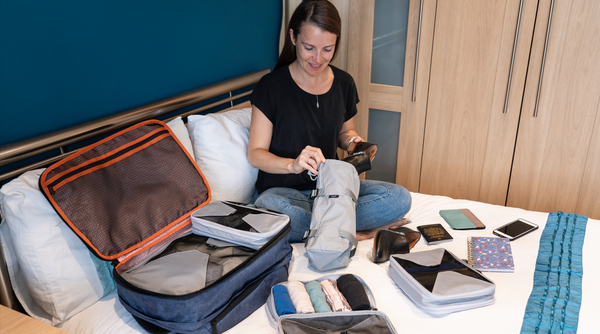
Knowing what you can bring is only half the battle. How you organize your bag can also make airport screening easier.
A well-organized travel bag helps you access electronics, separate liquids, and keep frequently used essentials within reach.
Here are a few practical packing strategies:
- Keep electronics accessible. Place laptops and larger electronics somewhere you can easily remove them if screening procedures require it.
- Organize liquids separately. Keep your quart-sized liquids bag near the top of your carry-on.
- Separate restricted items. Double-check that knives, oversized toiletries, and other restricted items aren't hiding in your everyday compartments.
- Use dedicated pockets. Store your passport, wallet, phone, and travel documents in designated compartments.
- Check your bag before leaving. Look through every pocket, including smaller zippered compartments, for forgotten items.
For more advice, explore what actually makes a bag TSA-friendly.
Why Does Your Travel Bag Matter at Airport Security?
An easy-access laptop pocket means you can grab your computer if screening calls for it, while the rest of your bag stays packed.
Look for features such as:
- Easy-access laptop compartments
- Dedicated pockets for electronics
- Separate storage for travel documents
- Organized compartments for accessories
- Lockable zippers
- A layout that makes it easy to find what you need
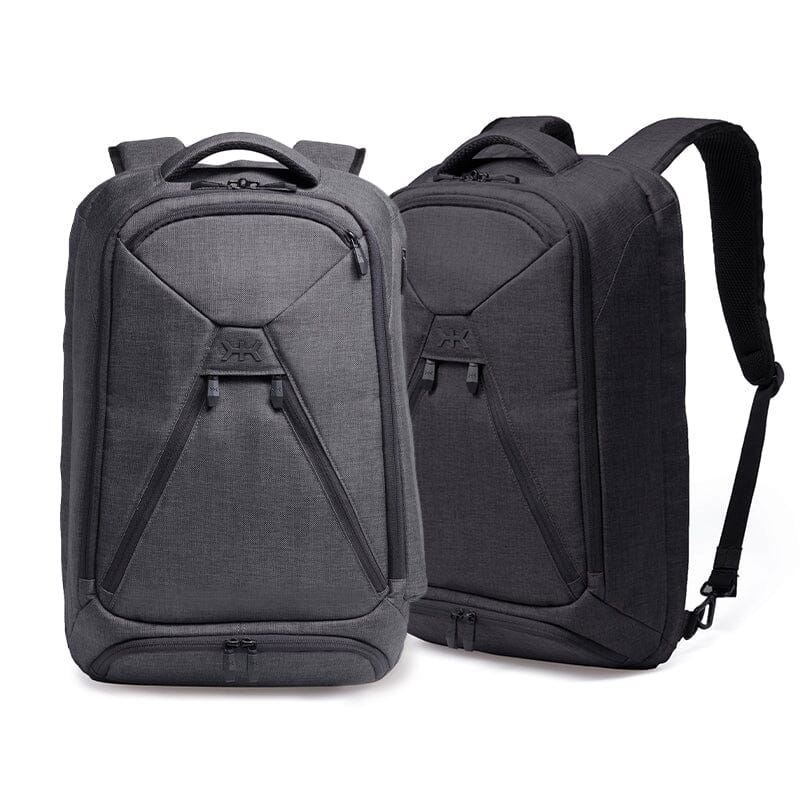
Knack's travel backpacks are designed to combine organization and functionality, making it easier to keep your travel essentials accessible.
If you're comparing bag features, our guides to must-have features for a tech travel backpack and choosing the right Knack Pack for your laptop size can help you find the right setup.
For everyday organization, you can also explore what makes an everyday carry bag and how to pack it.
Should You Use a TSA-Recognized Lock on Your Checked Luggage?
If you're checking a bag, a lock can add another layer of security.
TSA-recognized locks are designed so officers can open and relock them during an inspection. If officers need to inspect a bag and can’t open the lock, they may cut it.
Keep your bag locked if you like, and check the contents against TSA and FAA rules before you leave.
Knack's TSA-approved luggage lock is designed to help keep your belongings secure while traveling.
What Should You Check Before Heading to the Airport?
A few minutes of preparation can save you a lot of frustration at the security checkpoint.
Use this quick checklist before closing your travel bag.
Carry-on checklist
- Standard liquids are in containers of 3.4 fluid ounces (100 mL) or less.
- Standard liquids fit in one clear, quart-sized, resealable bag.
- No knives, box cutters, or prohibited sharp objects.
- Spare lithium batteries and power banks are packed in carry-on luggage.
- Vapes and e-cigarettes stay in the cabin and are protected against accidental activation.
- Laptop and electronics are easy to access.
- Food items comply with liquid and gel restrictions.
- No prohibited hazardous materials are packed.
Checked baggage checklist
- Full-size toiletries are securely packed.
- Any permitted sharp objects are sheathed or securely wrapped.
- No spare lithium batteries or power banks are packed.
- Any eligible electronics are completely powered off and protected against damage and accidental activation.
- Any firearm being transported meets TSA and airline requirements.
- No fireworks, fuel, or prohibited hazardous materials are packed.
For even more packing advice, check out our guide to stress-free holiday travel with your Knack Pack.
Travel Smarter by Knowing What's Allowed
A quick check of what you can and cannot bring on a plane can save you time once you’re in the security line.
Before you zip up, check the easy-to-miss spots. A pocketknife can hide in a front pocket, and a power bank is easy to forget when you hand over a bag at the gate.
Check the latest TSA and FAA guidance for anything you’re unsure about, then give your packing list one last look.
That’s one less thing to think about before takeoff.
Frequently Asked Questions About Prohibited Items on Flights
What are the most common items prohibited on planes?
Common restricted items include oversized liquids, knives, box cutters, firearms, ammunition, fireworks, certain sporting equipment, and hazardous materials. Some are prohibited only in carry-on bags, while others cannot travel in either carry-on or checked baggage.
Can you bring full-size shampoo on a plane?
Yes. Shampoo in a container larger than 3.4 fluid ounces (100 mL) belongs in checked baggage. For carry-on, use a smaller container and pack it in your quart-sized liquids bag.
Can you bring a portable charger on a plane?
Yes. Keep portable chargers and power banks in your carry-on. If your bag is gate-checked, take them out and keep them with you in the cabin. Check your airline’s battery capacity and quantity limits before packing.
Can you bring scissors on a plane?
Yes, if the blades measure less than 4 inches from the pivot point. Pack larger scissors in checked baggage with the blades sheathed or securely wrapped.
Can you bring food through airport security?
Yes. TSA generally allows solid food such as sandwiches and granola bars. Yogurt, peanut butter, and other liquids or spreads follow the 3-1-1 rule. Some routes also restrict fresh produce.
Can you bring a water bottle on a plane?
Yes. Take an empty reusable bottle through TSA screening, then fill it at a water station before boarding.
Are laptops allowed in checked luggage?
Laptops are generally permitted in checked baggage, but the FAA recommends keeping them in carry-on luggage. If checked, lithium battery-powered devices must be completely powered off and protected against accidental activation and damage.
Can you bring a pocketknife on a plane?
Pocketknives are prohibited in carry-on baggage but can generally be transported in checked luggage if properly secured. Always check applicable airline and destination regulations.
Are aerosols allowed on planes?
Some aerosols, such as hairspray and spray deodorant, are allowed. Pack carry-on aerosols under the TSA 3-1-1 rule and follow FAA limits on quantity, container size, and nozzle protection in either bag.
What happens if TSA finds a prohibited item in your carry-on?
The item can’t go through the checkpoint. Depending on what it is, you may be able to leave the checkpoint and put it in a checked bag if it’s allowed there. You can also voluntarily leave some items behind. Serious violations may lead to penalties or law enforcement involvement.
Where can I check whether an item is allowed on a plane?
Search TSA’s What Can I Bring? list for carry-on and checked-bag rules. Check FAA PackSafe for batteries and hazardous materials.