It wasn’t until a last-minute weekend getaway flight to sunny California that I left the roller bag behind for the first time and grabbed a soft-sided duffel instead. As I breezed through airports, public transport, and hotel lobbies unencumbered by the wheels for the first time, I was hooked.
More and more travelers are making this switch. The problem is, not everyone’s sure when a travel duffel bag qualifies as a carry-on or personal item. The rules can feel vague, and what passes on one flight might get flagged on another.
I’ve written this guide to clear up the ambiguity. Below, we’ll break down how airlines measure carry-ons versus personal items, what the TSA actually regulates, and how to select a duffel that meets the requirements for air travel.
Quick Answer
A duffel bag can be a carry-on as long as it meets your airline’s size and weight limits. Most U.S. carriers list a maximum of 22 x 14 x 9 inches for the overhead allowance.
Soft‑sided duffels are ideal because they can compress slightly to match bin space, even when packed to capacity. A duffel around 35 to 40 liters typically stays within carry‑on limits when packed efficiently.
While the Transportation Security Administration (TSA) handles security screening and liquids, it is not concerned whatsoever with baggage sizing. Rather, it is the individual airlines that set the length, width, and height rules that determine whether your bag fits in the overhead compartment.
Carry-On vs. Personal Item
Technically, the distinction between a carry-on and a personal item is all about where the bag is stored during the flight. Carry-ons go in the overhead bin, while personal items must fit under the seat in front of you. Practically speaking, it comes down to size.
The most common U.S. carry-on size limit is 22 x 14 x 9 inches, while personal item size limits usually fall closer to 18 x 14 x 8 inches, though exact numbers vary by carrier. The most common personal items people travel with are backpacks and large handbags.
How do airlines determine Personal Item vs Carry-On?
Usually, gate agents visually assess bag size. Whether your bag gets flagged often depends on your fare class, boarding group, and how full the flight is. If you're flying on a Basic Economy or budget fare, expect stricter enforcement.
Airlines use bag sizers at the airport to determine whether your luggage qualifies as a personal item or a carry-on. These are typically metal or plastic frames located near the check-in counter and boarding gate. If your bag fits cleanly into the sizer for a personal item, it qualifies.
Soft-sided bags have an advantage because they can flex slightly to fit within the sizer, but avoid overpacking. Bulging pockets, an overstuffed main compartment, or bulky items hanging from the outside can cause an otherwise compliant bag to fail.
Can a duffel bag be a personal item?
Yes, a duffel bag can qualify as a personal item if it fits under the seat in front of you. In general, soft duffels with a smaller profile (18-20 liters) are very likely to pass.
Many duffels exceed the size limits for under-seat storage, especially if they have a rigid base or are packed full. When in doubt, measure the packed dimensions of your bag and compare them to your airline’s personal item allowance.
Pro Tip:

I travel with the Knack Convertible Duffel and have found I never get gate checked if I wear it like a backpack, rather than over one shoulder. While the size is the same either way, gate agents are more accustomed to waving through backpacks.
Airline Size Limits
As I’ve mentioned, it is the airlines, not the TSA, that determine the allowed size of carry-on luggage. TSA cares only about security, while the carrier is concerned with space.
While most carriers follow the same standards for baggage allowance, there are notable exceptions that can affect your travel needs.
Legacy carriers
Most major U.S. airlines (Delta, United, American, Alaska) allow carry-ons up to 22 x 14 x 9 inches. This size includes all external parts of the bag, including handles, straps, and bulges from shoes or jackets.
A well-packed travel duffel bag that stays within these dimensions is considered a compliant carry-on. And because soft duffels can compress slightly, they’re often easier to fit into an overhead bin than rigid rollers. That makes them especially useful on full flights or regional jets with limited space.
If you're traveling with both a laptop backpack and a duffel, remember that your backpack typically counts as your personal item while your duffel serves as your carry-on. Always verify your airline's baggage policy before departure.
Notable exceptions
Southwest Airlines allows larger bags up to 24 x 16 x 10 inches, giving you more room to work with.
On the other hand, low-cost carriers like Spirit and Frontier may charge for carry-ons and restrict you to personal items only unless you pay extra.
If you're flying internationally, rules vary even more. British Airways allows 22 x 17.7 x 9.8 inches, while Ryanair and EasyJet have stricter limits unless you pay for “priority boarding.” Always check your airline’s carry-on dimensions and any weight limits before heading to the airport.
Airline baggage sizing compared to one another
|
Airline |
Carry-On Size Limit (inches) |
Personal Item Size Limit |
|
Delta |
22 x 14 x 9 |
18 x 14 x 8 |
|
American |
22 x 14 x 9 |
18 x 14 x 8 |
|
Southwest |
24 x 16 x 10 |
18.5 x 13.5 x 8.5 |
|
United |
22 x 14 x 9 |
17 x 10 x 9 |
Best Duffel Size & How to Measure
When trying to figure out what size duffel bag for carry on, it’s about how the bag behaves when packed.
For most U.S. airlines, you’ll want your duffel’s packed size to stay under the 22 x 14 x 9-inch restriction if you plan on using it as a carry-on. This typically translates to about 35-40 liters of usable capacity, depending on the shape of the bag. Look for a carry-on duffel bag that’s labeled with volume and dimensions, and be aware that expanding compartments can push you over the limit.
If you are hoping to use your duffel as your personal item instead, make sure it is soft-sided and in the 18-20 liter range. I've found that the new Knack Bags Metro Duffel is the perfect solution when searching for a bag that is an elite personal item or carry on, when expanded.
Structured duffels or those with internal frames are more likely to max out bin space. Soft-sided bags tend to flex and compress, which helps when fitting them into overhead compartments while still protecting your gear.
Measuring a soft duffel
You'd be surprised, it’s easy to get this wrong! The key to measuring your duffel is to do so after the bag is packed, not when it’s empty and compressed.
Even if your bag is clearly labeled as a compliant size, airlines won’t care about the tag if it doesn’t fit in the sizer box.
After packing, use a tape measure to check:
- Length (end to end)
- Width (side to side)
- Height (floor to top, including bulges and handles)
If you’re worried about squeezing into the sizer, err on the side of caution and pack conservatively. Leaving a little unused storage space can make the difference between sliding easily into the sizer and having to check your bag.
Choosing the Right Capacity
The best size also depends on how you're traveling.
- For a short trip or overnight stay, an 18 to 25-liter duffel is often enough.
- For a weekend getaway, a 30 to 40-liter bag provides plenty of room while still meeting most airline carry-on limits.
- If you're packing for a longer trip, you may need to supplement your duffel with a personal item instead of overstuffing the main bag.
Rather than choosing the biggest bag you can find, look for one with thoughtfully designed smart compartments that help organize clothing, electronics, and travel essentials without adding bulk.
Pro Tip
Remember that what goes inside your bag affects how it measures. A bulky pair of shoes, an overfilled toiletry bag, or items stuffed into exterior pockets can change the overall dimensions enough to push your bag beyond airline limits. Packing efficiently is often more important than buying a larger bag.
How to Pack Your Duffel (and Pass the Sizer)
A duffel bag’s flexibility is only useful if you pack it smart. Poor packing turns a compliant bag into a bulging liability at the gate.
Cubes, compression, and bulge control
Use packing cubes to create clean, modular layers inside the bag. Place heavier items like shoes or your toiletry bag at the center or bottom of the main compartment to avoid lopsided bulges. Avoid stuffing items into end pockets if those pockets expand outward and change the shape of the bag.
If your duffel has an expandable compartment section, keep it zipped down while flying. Expansion features are best used at your destination, not when trying to fit a carry-on into a sizer at the gate.
Pro Tip
If you think you’re going to be checked for size, keep bulky end-pocket items, like water bottles, in your hand or pocket while at the gate.
Tech and toiletries placement
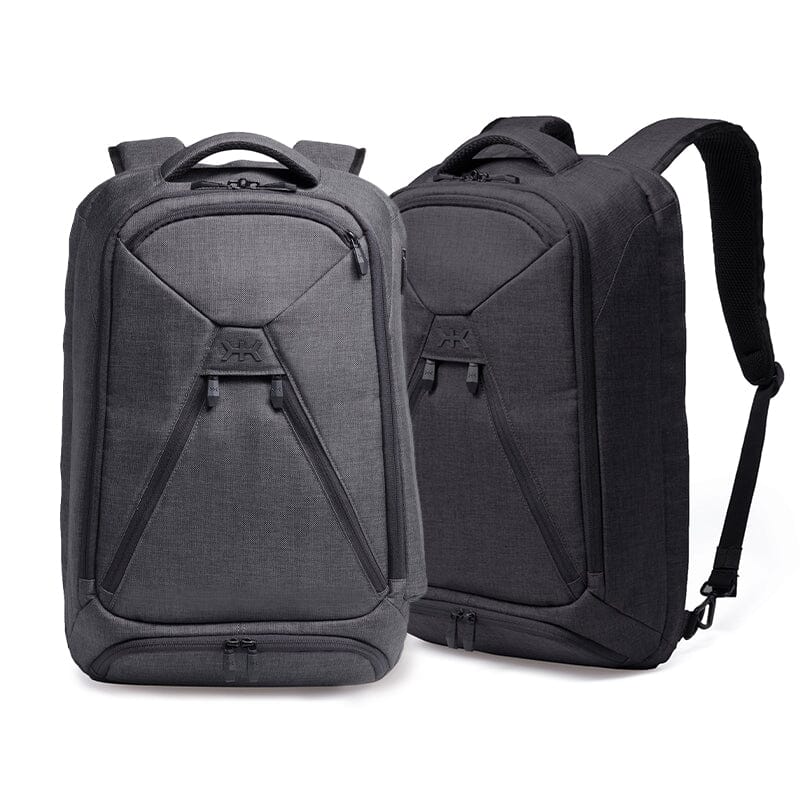
One of the disadvantages of a duffel bag over a quality backpack like the Knack Expandable line is the lack of a protective, dedicated laptop sleeve. To make sure it stays safe, keep your laptop in a padded compartment either close to your back or in the center of the bag. This will prevent bowing or hard pressure points.
Place your liquids bag at the top or in a dedicated pocket so you can pull it out quickly at TSA checkpoints. And remember the 3-1-1 rule (3.4 ounces or smaller per container, 1 quart-sized, clear, resealable bag per passenger, and 1 bag per passenger).
Well-balanced packing is especially important with duffel bags as it helps your bag maintain its shape, fit more efficiently into bins, and avoid being flagged by gate agents.
When a Duffel Bag Beats a Roller
To put it bluntly, rolling luggage is great in airports. Duffels are better everywhere else. Duffel bags excel when your trip involves walking, stairs, subways, rideshares, or tight storage spaces. A duffle bag for a carry-on is easier to lift into overhead bins, carry down narrow aisles, or sling over your shoulder when navigating crowds.
Duffel bags, and especially the Knack Bags Medium Travel Duffel Bag, shine when you have flexible travel plans and situations where structure isn’t necessary.
When not to pick a duffel
Avoid using a duffel if:
- You’re carrying fragile tech without protective compartments
- You have mobility concerns and need wheeled support
- Your trip involves long walks in large terminals, where a roller saves effort
In these cases, a small spinner or hybrid backpack might serve you better.
Knack’s Recommended Duffel Bags
Knack has expanded its carry-on lineup with three bags designed for hybrid travel, professional function, and full airline compliance.
Expandable Medium Travel Duffel - A Workhorse Duffel Bag

This soft-sided duffel is sized to fit most major airline overhead bins while offering expansion capability for destination use. It’s ideal for weekend trips or quick getaways where flexibility matters.
The clean exterior and durable materials will make it a smart choice for business travelers or minimalists who want one bag that does it all.
Metro Duffel - A Tech Weekender

Designed for digital nomads, hybrid workers, or frequent fliers who carry both clothes and tech. The Metro Duffel blends laptop protection with smart compartments and clean aesthetics.
It’s built to handle work gear and two to three days of clothing in a streamlined form factor.
Expandable Laptop Tote Bag - The Perfect Everyday and Travel Sidekick (Qualifies as Personal Item too)

The Laptop Tote Bag is meant to fit cleanly under the seat, hold a laptop and essentials, and pair seamlessly with a larger carry-on. It’s perfect for travelers who want an elegant second bag that doesn’t feel like a backpack or purse.
FAQs
What is the max carry-on duffel bag size?
The max carry-on duffel bag size for most U.S. airlines is 22 x 14 x 9 inches, including handles and straps. Soft-sided duffels that hold around 35 to 40 liters typically meet these size requirements when packed properly.
Can I bring a duffel and a backpack?
You are allowed both a duffel and a backpack if your fare allows both a carry-on and a personal item, and both are size-compliant.
Do wheels and handles count in size?
Absolutely yes, the carry-on size limit includes everything attached to the bag. That means handles, straps, and wheels are all measured. Measure the full exterior dimensions when your bag is packed.
What happens if my duffel gets gate-checked?
If the bag is too large or the bins are full, the airline may tag it and send it to the cargo hold. Typically, you will be charged for a checked bag as well. Always keep valuables, medication, and electronics accessible so you can pull them out quickly if this is a concern.
Conclusion
By the time you zip your bag shut and head for the terminal, you’ll already feel the difference. Less bulk. Fewer moving parts. A simple setup that keeps pace from check-in to final gate without slowing you down. That’s the quiet power of a well-packed duffel. It moves with you, not against you.
This kind of bag works best for the traveler who values flexibility. If the trip calls for a mix of work and movement, structure and ease, a smart duffel is often the better fit.
You’ve got the rules. You’ve got the measurements. You know what to look for. With the right size and a little foresight, a duffel becomes the carry-on you’ll want to bring every time.