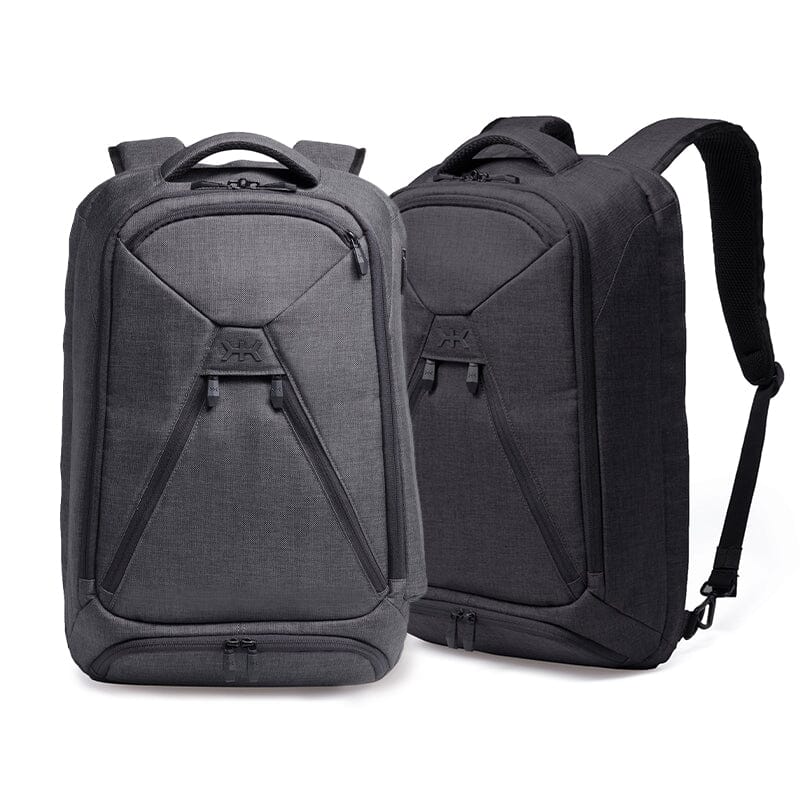
Skip the extra bag with an expandable travel backpack that carries your gear on the journey and becomes your daypack once you arrive.
Packing for a trip often means preparing for two different kinds of travel.
First, you need a bag that can carry clothing, shoes, toiletries, electronics, and other gear between destinations. Once you arrive, however, you usually need something much smaller for sightseeing, errands, restaurants, and day trips.
That is why many travelers pack a separate day bag.
A packable daypack or one of the many packable bags available today can be folded into a suitcase or stored inside a larger travel backpack until it is needed. A tote bag can also work for carrying a few essentials, although it may not offer the support or organization needed for a full day of exploring.
But there is another option: skip the extra day bag altogether.
An expandable travel backpack can give you the capacity you need while traveling, then collapse into a more compact configuration once you have unpacked. Instead of carrying a large travel backpack and a second daypack, you can use one adaptable bag for both.
The concept is simple:
- Expand your backpack when you need more room for travel.
- Unpack your clothing and larger belongings when you arrive.
- Collapse the backpack into a smaller configuration.
- Carry only the essentials you need for the day.
One backpack. Two modes of travel.

You Don’t Need to Pack a Separate Day Bag
A day bag is designed to carry the essentials you need once you arrive at your destination, including your phone, wallet, water bottle, sunglasses, sunscreen, a light jacket, snacks, or a camera. It gives you a smaller, more manageable way to explore without carrying everything you packed for the trip.
But what if your travel backpack could do both jobs?
An expandable backpack can provide the extra capacity you need while traveling, then collapse into a more compact configuration once you arrive and unpack your belongings. Instead of bringing a separate packable daypack or tote bag, you can use the same backpack for sightseeing, errands, restaurants, and day trips.
Here’s how it works:
- Expand it for travel: Use the additional space for clothing, shoes, toiletries, electronics, and other gear.
- Unpack when you arrive: Remove the belongings you plan to leave at your hotel, vacation rental, or other accommodation.
- Collapse it for everyday use: Return the backpack to a smaller configuration when you no longer need the extra capacity.
- Carry only what you need: Use the backpack as your day bag for water, personal items, layers, snacks, and other daily essentials.
This approach means you do not have to find room for an extra bag, remember to pack a second backpack, or switch between bags throughout your trip.

Skip the Extra Day Bag
The best travel backpack does more than carry your belongings from one destination to another. It should also work once you arrive. An expandable backpack can provide additional capacity when you are packing for a trip, while a collapsible design allows the bag to return to a more compact shape after you have unpacked. That means your travel backpack can become your daypack without requiring a second bag.
Expand when you need the space
Before departure, you may need room for:
- Clothing.
- Shoes.
- Toiletries.
- Travel accessories.
- Electronics.
- A jacket or additional layers.
- Other gear needed for the journey.
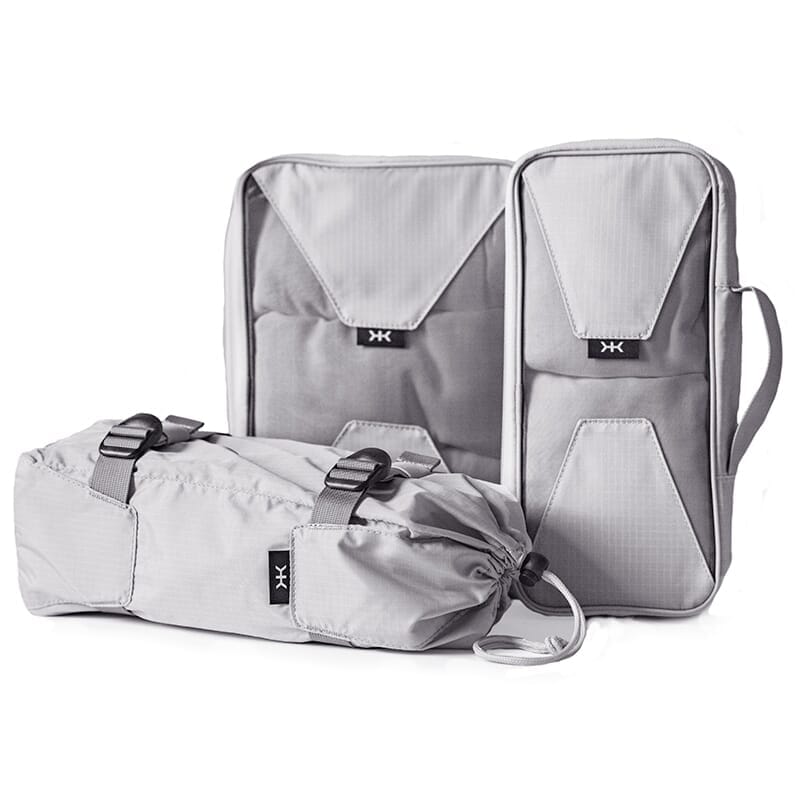
An expandable main compartment gives you flexibility when packing these items. You can use packing cubes to organize clothing and keep smaller belongings from getting lost inside the bag.
The goal is to create enough room for the trip without carrying unnecessary volume after you arrive.
Collapse when you arrive
Once you reach your destination, your backpack no longer needs to hold your entire travel wardrobe.
After unpacking your clothing, shoes, and other larger belongings, you can collapse the backpack into a more compact configuration, depending on the design.
This smaller setup can be used for:
- Walking around a new city.
- Visiting museums and attractions.
- Going out for lunch or dinner.
- Taking public transportation.
- Carrying essentials on day trips.
- Exploring before check-in or after check-out.
Instead of packing a separate daypack, you simply adjust the expandable bag you already brought.
Carry what you need for the day
In its compact configuration, your backpack may only need to carry a few essentials.
That could include:
- Water bottle.
- Phone and wallet.
- Sunglasses.
- Sunscreen.
- Light layer.
- Camera.
- Snacks.
- Small personal items.
- Laptop or tablet, if needed.
The result is a more flexible travel setup that adapts to the day rather than requiring you to carry the same amount of space everywhere.

One Backpack, Two Modes of Travel
A backpack that expands and collapses can serve two different purposes throughout your trip.
|
Travel mode |
What you need |
How the backpack helps |
|
Moving between destinations |
Clothing, shoes, toiletries, electronics, and travel gear |
Expands to provide additional capacity |
|
At your hotel/accommodation |
A place to unpack and organize your belongings |
Returns to a smaller configuration after unloading |
|
Exploring during the day |
Water bottle, phone, wallet, camera, and light layers |
Functions as a compact daypack |
|
Work or business travel |
Laptop, charger, notebook, and personal items |
Provides organization through a laptop compartment or laptop sleeve |
|
Day trips |
Food, water, extra layers, and small essentials |
Offers flexible capacity without requiring an extra bag |
This is the main advantage of an adaptable travel backpack. It is not only designed for the journey between destinations. It is designed to remain useful after you arrive.
What Makes a Good Travel Backpack and Daypack in One?
Not every expandable backpack is comfortable or practical when used as a daypack. When choosing a bag that will serve both purposes, pay attention to the features that affect everyday use.
Comfortable carry
A backpack should feel comfortable when it is fully packed and when it is carrying a smaller daily load.
Look for:
- Adjustable straps that help create a secure fit.
- A comfortable shoulder strap design.
- Padding in the areas that contact your body.
- A back panel that supports the load.
- A sternum strap for additional stability, especially when carrying heavier gear.
- A shape that stays balanced when the main compartment is partially empty.
Comfortable carry becomes especially important when you are walking through a city for several hours or using the backpack for day trips.
Adjustable straps
Adjustable straps allow you to customize the fit based on your body and the amount you are carrying. A well-fitted backpack should sit securely without pulling excessively on your shoulders or shifting from side to side.
Depending on the design, useful strap features may include:
- Adjustable shoulder straps.
- A sternum strap.
- A padded shoulder area.
- Strap adjustments that are easy to reach.
- A design that keeps the backpack close to your body.
The right fit can make a difference when your backpack transitions from a travel bag into an everyday carry bag.
Main compartment
The main compartment should provide enough space for the larger items you need while traveling, while remaining manageable when the bag is used for daily activities.
When evaluating the main compartment, consider:
- How much clothing it can hold.
- Whether it accommodates packing cubes.
- How easily you can access your belongings.
- Whether the compartment expands and collapses smoothly.
- Whether the bag maintains its shape when partially packed.
A flexible main compartment can help the backpack serve both as travel luggage and as a daypack.
Laptop sleeve or laptop compartment
If you plan to use your backpack for work travel, look for a laptop sleeve or dedicated laptop compartment.
A padded laptop sleeve can help separate your computer from clothing, shoes, and other gear. A dedicated laptop compartment may also make it easier to access your device without opening the main compartment.
Consider:
- The size of the laptop compartment.
- Whether the sleeve is padded.
- Whether the laptop is protected from the bottom of the bag.
- Whether the compartment is easy to access.
- Whether it leaves enough room for your charger and other accessories.
A laptop compartment can make an expandable travel backpack more useful beyond vacations, particularly for commuting, business travel, and everyday errands.
Water bottle pockets
Water bottle pockets are useful when a backpack transitions into a daypack.
During a full travel day, having a dedicated place for your water bottle can keep it separate from clothing, electronics, and other belongings.
Water bottle pockets may also be useful for carrying:
- Travel mugs.
- Umbrellas.
- Small outdoor gear.
- A reusable bottle during day trips.
If you regularly spend time walking or exploring outdoors, accessible water bottle pockets can be a practical feature.
Fabric and durability
The fabric used in a backpack affects its weight, durability, structure, and overall feel.
A lightweight fabric may make a packable bag easier to store, while a more structured fabric may provide additional support and protection.
When comparing options, consider:
- How the fabric feels when carrying the bag.
- Whether it holds its shape when expanded.
- Whether it collapses easily when empty.
- How it handles everyday wear.
- Whether the material is appropriate for your travel environment.
The best fabric depends on how you plan to use the backpack. A bag intended for occasional day trips may have different construction priorities from one used for frequent travel and commuting.
What to Carry in Your Backpack After You Arrive
Once your clothing and larger belongings are unpacked, the contents of your backpack can become much simpler. You do not need to carry your entire travel setup for a day of exploring. Instead, pack around the activities you have planned.
For city sightseeing
A compact daypack configuration may be enough for:
- Phone and wallet.
- Water bottle.
- Sunglasses.
- Sunscreen.
- Light jacket.
- Camera.
- Snacks.
- Travel documents.
This setup works well for walking through neighborhoods, visiting museums, shopping, and stopping at restaurants.
For outdoor day trips
A longer day trip may require additional gear, such as:
- Extra clothing layers.
- Rain jacket.
- Food.
- Water.
- Camera equipment.
- Small first-aid supplies.
- Activity-specific accessories.
For these activities, make sure the backpack remains comfortable when carrying the additional weight. A compact configuration should still provide enough usable capacity for the day.

For work or business travel
If your trip combines work and leisure, you may need:
- Laptop or tablet.
- Padded laptop sleeve.
- Charger.
- Notebook.
- Headphones.
- Water bottle.
- Personal items.
A backpack with a laptop compartment and organized storage can make it easier to transition from a travel bag to a work bag without bringing another piece of luggage.

Do You Need a Separate Packable Daypack?
Not necessarily.
A separate packable daypack can be a useful option if you want a lightweight secondary bag that folds into your luggage. It may also be helpful if your main travel backpack is too large, too structured, or uncomfortable to carry once fully unpacked.
However, a separate daypack may not be necessary when your main backpack:
- Expands to carry your travel gear.
- Collapses into a more compact configuration.
- Has comfortable shoulder straps.
- Offers useful organization.
- Includes water bottle pockets.
- Provides a laptop sleeve or laptop compartment when needed.
- Remains comfortable with a smaller daily load.
In that case, your travel backpack can serve as both your luggage and your daypack.
The decision comes down to how you travel and what you want your bag to do once you arrive.
Expandable vs. Packable Bags
Expandable and packable bags are designed around different needs.
A packable bag is generally designed to fold or compress into a smaller shape for storage. An expandable backpack is designed to provide more capacity when needed and reduce its volume when that additional space is no longer necessary.
Both can be useful, but the right option depends on whether you want a second bag or one adaptable bag.
|
Feature |
Expandable travel backpack |
Packable daypack |
|
Main purpose |
Adjust capacity throughout the trip |
Store compactly inside another bag |
|
Number of bags |
Can serve as the primary travel bag and daypack |
Usually used as an additional bag |
|
Capacity |
Changes depending on the configuration |
Usually fixed |
|
Organization |
May include travel and everyday compartments |
Often prioritizes lightweight construction |
|
Comfort |
Depends on the design in both configurations |
Depends on straps, padding, and load |
|
Best for |
Travelers who want one bag for multiple uses |
Travelers who want a dedicated secondary day bag |
A packable daypack is one option. An expandable backpack that collapses after unpacking is another. The advantage of the second approach is that you do not have to carry an extra bag just to have something smaller once you arrive.
Questions to Ask Before Buying a Travel Backpack
Before choosing a travel backpack, consider how it will work throughout your entire trip.
Does it expand enough for your travel needs?
Think about how much clothing, gear, and personal belongings you usually pack. Make sure the expanded capacity is appropriate for your trip length and packing style.
Does it collapse into a useful daypack?
A backpack that technically becomes smaller may not be practical for everyday use. Consider its size, shape, organization, and comfort when it is partially empty.
Is it comfortable to carry?
Look for adjustable straps, a comfortable shoulder strap design, padding, and a sternum strap if you expect to carry heavier loads or walk long distances.
Does it have the organization you need?
Consider whether the backpack includes:
- A functional main compartment.
- Interior organization.
- Water bottle pockets.
- A laptop sleeve.
- A padded laptop compartment.
- Accessible pockets for smaller items.
Can it replace your extra bag?
The most important question is whether the backpack can handle both parts of your trip: transporting your belongings and carrying your daily essentials after you arrive.
If it can, you may not need to bring a separate packable daypack or tote bag.
One Bag for the Journey and the Destination
A travel backpack should not become obsolete the moment you unpack.
The most useful design is one that adapts to the entire journey, from airport transfers and hotel check-ins to sightseeing, work travel, and day trips.
An expandable backpack gives you room when you need it. A collapsible configuration gives you a more manageable option once your larger belongings are unpacked.
That means you can skip the extra day bag and use one backpack for both.
Expand for the journey. Collapse for the destination. Carry what you need, and leave the rest behind.